
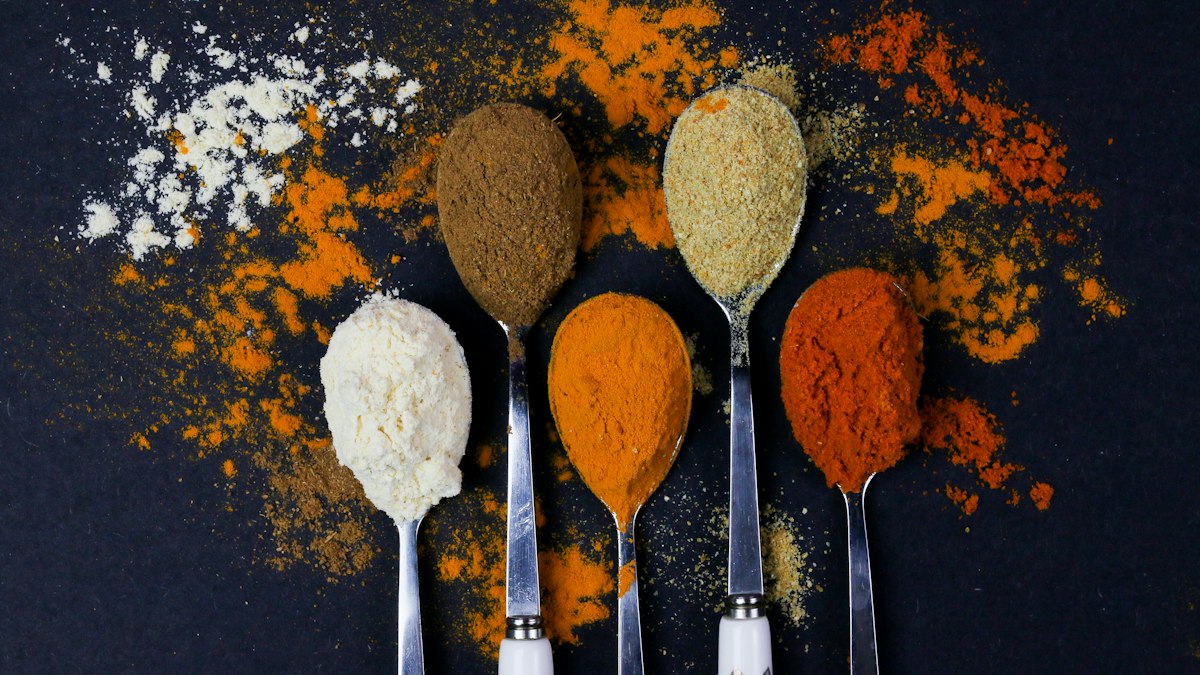
Spices arrive from the field carrying a microbial load. That is normal. They are grown in soil, dried in the open and handled many times.
Reducing that load without ruining the product is one of the harder problems in this trade. The methods available have changed a lot in recent years, and the change has real consequences for what you buy and what you pay.
Why spices carry bacteria at all
Think about how a spice reaches a warehouse. It grows in a field. It is picked by hand. It dries on a yard or in a tunnel. It is bagged, moved, cleaned and bagged again.
At every step it touches soil, air, equipment and people. None of that is unhygienic. It is agriculture.
The result is a natural population of bacteria, yeast and mould. Most of it is harmless. Some of it is not, and food manufacturers have to control it, particularly when the spice goes into a product that will not be cooked again.
The usual measures are total plate count, yeast and mould count, and specific tests for Salmonella and E. coli.
Why ethylene oxide stopped being usable
Ethylene oxide, known in the trade as ETO, was the standard treatment for decades. It is a gas. The spice is placed in a chamber, the gas is introduced, and it kills bacteria very effectively.
It has two commercial advantages that are hard to beat. It is cheap. And it does almost no damage to the product, because it works at low temperature. Colour and aroma survive.
The problem is that ETO is classified in the EU as a carcinogen and a mutagen. Its use on food is prohibited there, and the residue limit sits at the detection default, which means effectively zero.
From 2020 onward the European rapid alert system issued a large wave of notifications over ETO residues. It began with sesame and then spread across a wide range of spices and food additives, including locust bean gum used as a thickener.
The effect was immediate. Products were recalled. Whole supply chains were re-tested. For EU bound material, ETO simply stopped being available as an option.
Some markets outside the EU still permit it under controlled conditions. But if any part of your business touches Europe, treating it as unavailable is the safe position. EU residue limits explains how the default limit works.
Steam sterilisation, and what it costs you
Saturated steam under controlled pressure and time is the mainstream replacement. It is effective and it leaves no residue at all.
But it is heat and moisture applied to a dried aromatic product, and that has consequences. Any supplier who tells you otherwise has not measured it.
What changes
- Volatile oil content drops. This is where aroma lives. How much you lose depends on the product and on the cycle used. Delicate products lose more.
- Colour can shift, particularly in green herbs. Bright green can go dull or olive.
- The material must be re-dried afterwards, back to its specification moisture. That is another heat step.
- Yield falls. You lose some weight and some material.
- The processing cost is real and appears in the price.
This is why a steam treated lot and an untreated lot of the same spice are not interchangeable in an aroma led application. They are different products.
It matters most for dehydrated herbs and leafy products, where both colour and aroma are the reason for buying.
The practical rule
If you are buying steam treated material, the volatile oil figure must be measured after treatment, not before.
A certificate showing volatile oil on the untreated material is describing a product you are not receiving. This single point is worth more than anything else on this page.
Irradiation
Irradiation exposes the product to ionising radiation. It is effective, and it preserves volatile compounds better than steam does, because there is no heat.
Two things limit it.
First, acceptance varies by market. Some countries permit it broadly, some restrict it, some effectively do not allow it for food.
Second, labelling requirements apply in many markets. Irradiated food often has to be declared as such on the pack, and some retailers will not stock it.
It is a legitimate option where the destination permits it and the buyer is willing to declare it. It is not a way around a labelling rule.
Other approaches
A few other methods appear in the trade and are worth knowing about.
Controlled steam at lower intensity. Shorter cycles that reduce the load less but damage the product less. Useful where your microbiological target is moderate.
High pressure processing. Used more in wet foods than dried spices. Rarely relevant here.
Better upstream hygiene. Cleaner drying yards, covered drying, faster handling and good storage all reduce the starting load. This does not replace treatment where a low count is required, but it reduces how hard the treatment has to work, which means less damage to the product.
The last one is the least discussed and the most useful over time.
Agree the treatment before you order
The worst sequence is this: you order, the goods are produced, a microbiological test fails, and treatment is applied as an emergency fix.
Now your volatile oil is lower than the specification you agreed, and nobody planned for it.
Decide the treatment at the start. Then your specification should name three things:
- The method. Untreated, steam sterilised, or irradiated.
- The target reduction, or the microbiological limits you need to meet.
- The post treatment values for moisture and volatile oil, because those are the numbers that will have moved.
Writing a specification a supplier can hold covers how to set those out so they are enforceable.
Questions worth asking your supplier
- Which treatment do you use, and where is it done?
- Is the treatment facility audited, and by whom?
- What is the volatile oil before and after?
- What moisture does the product come back to after re-drying?
- Can you supply untreated material if I want to treat it myself?
- Do you test for ETO residues even on untreated lots?
That last question is more useful than it looks. ETO can appear in material that was never intentionally treated, through cross contamination in shared storage or transport. Testing for it is cheap insurance.
The short version
ETO is effectively gone for EU bound spice. Steam is the mainstream replacement, it works, and it costs you aroma, colour and yield.
Decide the treatment before the first order, not after a failed test. Specify the method, the target and the values after treatment.
And whenever you are quoted a volatile oil figure on treated material, ask when it was measured.