
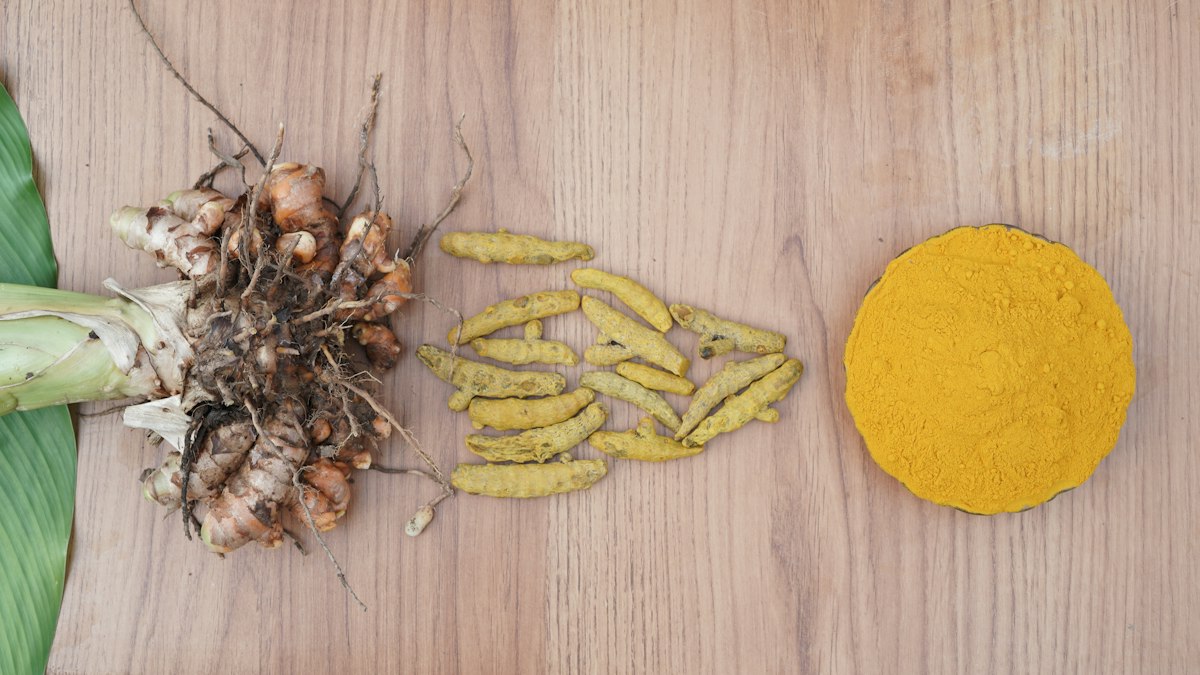
Turmeric is one of the few spices where a single lab number drives most of the price. That number is curcumin content.
It is also a spice where buyers routinely pay for more than they need, because a bigger number sounds better. This page explains what curcumin content is, what changes it, and how to decide which level your product actually requires.
What curcumin content means
Curcuminoids are the yellow pigments in the turmeric root. There are three of them. Curcumin is the main one, and the trade uses “curcumin content” to mean all three added together.
The figure is given as a percentage by weight. Indian export turmeric usually runs between 2 and 5 per cent.
Three things move that number: the variety, the growing region, and the crop year. Weather during the season matters. So does how long the root was boiled and dried after harvest.
How it is tested
There are two common methods and they are not equally reliable.
HPLC stands for High Performance Liquid Chromatography. It separates the three curcuminoids and measures each one. It is the accepted method for a contract figure.
Colorimetry measures how much light a solution absorbs and estimates curcumin from that. It is faster and cheaper. It is also less reliable, and it can be pushed upward by anything else yellow in the sample.
If a certificate does not say which method was used, ask. Our turmeric powder is reported by HPLC per lot for this reason.
Origin drives the range
Indian turmeric comes from several growing belts, and each has a typical curcumin range. Knowing them helps you judge whether a quoted figure is realistic.
- Erode, Tamil Nadu: usually the higher curcumin material, and priced accordingly. Often the source when 4 or 5 per cent is quoted.
- Nizamabad, Telangana: the volume origin. Generally mid range. Most of the world’s traded turmeric passes through here.
- Sangli, Maharashtra: known for hard, bright fingers with very good appearance. Often chosen where the whole root is sold.
- Salem and Kadapa: also significant, with their own typical ranges.
If someone quotes 6 per cent from a region that does not usually produce it, ask which lab tested it and by which method. It is not impossible. It is worth checking.
What level do you actually need?
This is the question most buyers skip, and it is where the money is.
Curry powder, sauces and retail packing
For these, curcumin is mostly acting as a colour. Your customer sees yellow. They do not measure curcuminoids.
Material at 3 per cent performs perfectly well in a curry powder or a sauce base. The money saved against 5 per cent is real and repeats on every container.
Buy 3 per cent unless you have a specific reason not to.
Nutraceutical and supplement extraction
Here curcumin is the product. It determines extraction yield directly. A higher percentage means more finished extract from the same tonnage, so paying more per kilo can still be cheaper per kilo of output.
For nutraceutical use the figure should be contracted tightly, with the method named and a minimum rather than a typical value.
Branded retail with a label claim
If your pack says something about curcumin, the specification has to match the claim, and your testing has to be able to support it if a regulator asks.
This is the case where the highest grade is often justified, and where a typical value is not good enough. You need a minimum.
Mesh size matters too
Curcumin gets the attention, but grind size affects how the product behaves.
Standard export turmeric powder is milled to 60 to 80 mesh. A higher mesh number means a finer powder.
Finer powder disperses faster and looks brighter. It also loses aroma more quickly in storage, because more surface is exposed to air. If you are buying for flavour rather than colour, do not over specify the fineness.
State the mesh on the contract. “Fine powder” means different things in different mills.
The adulteration problem
This part is not a quality quibble. It is a food safety matter and it deserves direct language.
Turmeric is one of the more commonly adulterated spices. Historically the problem has been lead chromate, a bright yellow industrial pigment added to improve colour. Lead is a cumulative poison. It is particularly dangerous for children.
Other adulterants include chalk, starch and artificial dyes such as metanil yellow.
Two tests catch most of this, and both belong on every turmeric specification regardless of curcumin level:
- Acid insoluble ash. This measures mineral matter that does not dissolve in acid, which means sand, soil and chalk. A normal figure is low. A high figure means something was added.
- Heavy metals panel, with lead specifically named.
Ask for both on the certificate of analysis, from an accredited laboratory, for the lot being shipped. A supplier who resists this is answering your question.
Whole turmeric or powder?
Whole dried fingers are harder to adulterate than powder, because you can see what you are buying. Some buyers import fingers and grind in their own market for that reason.
The trade off is cost and convenience. Grinding in India is cheaper, and a good supplier will mill against your order rather than from old stock.
If you buy powder, the safeguard is the test panel above, plus buying from someone who will tell you the grinding date.
A specification checklist
A workable turmeric specification covers all of these:
- Curcumin content as a minimum, with HPLC named as the method.
- Mesh size.
- Origin region, if it matters to you.
- Moisture, measured on the packed lot.
- Total ash and acid insoluble ash.
- Heavy metals, with lead named.
- Pesticide residue panel against your destination market.
- Whether any treatment such as steam sterilisation was applied, and the values after treatment.
- Packing, bag weight and liner.
The short version
Curcumin content drives turmeric pricing. Buy the level your application needs, not the highest number on offer. For colour, 3 per cent is usually enough. For extraction, buy high and contract it tightly.
Insist on HPLC. Insist on acid insoluble ash and a lead test. Those three lines protect you from both overpaying and from the one genuine safety risk in this commodity.
Tell us your application and your destination market, and we will recommend a grade rather than quote you the most expensive one.